
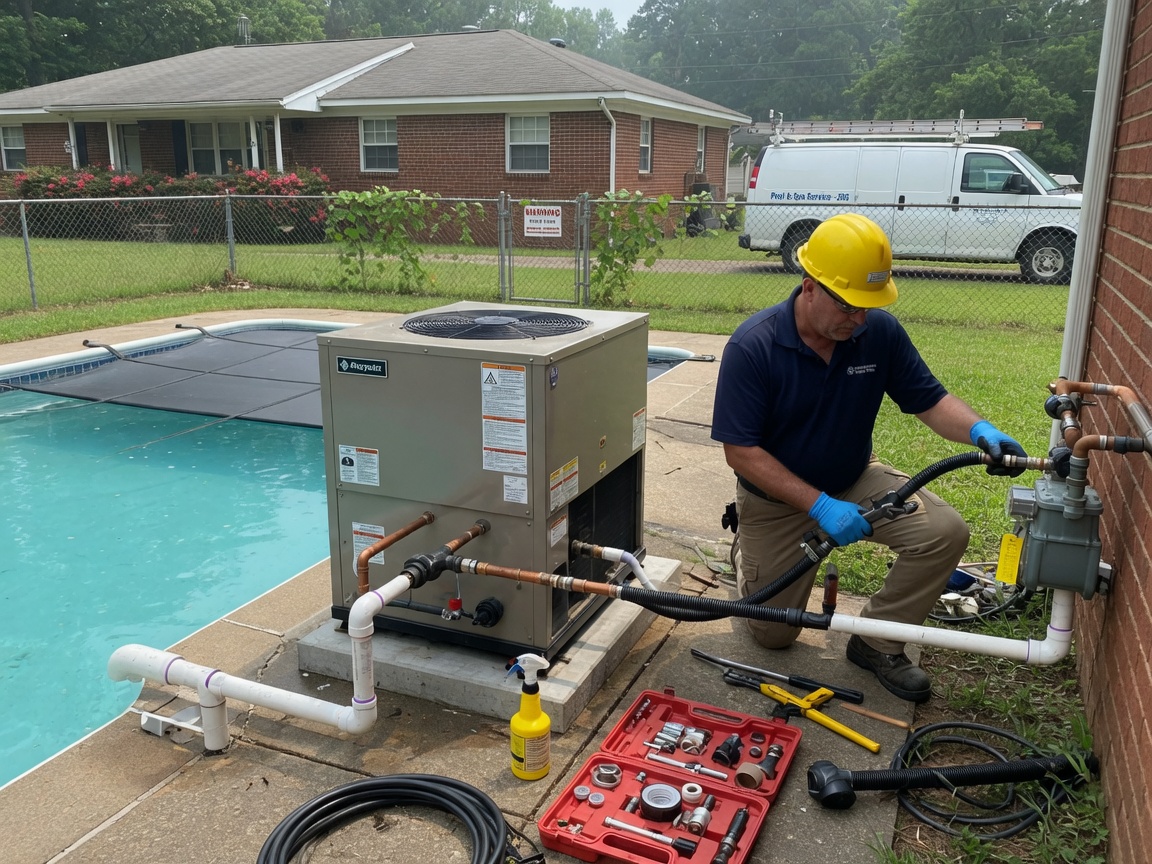
Birmingham's humid subtropical climate drives heavy pool use from late spring through early fall, especially in neighborhoods like Forest Park and Highland Park where older brick homes from the 1920s often need new gas lines run from the main to backyard equipment. Trenching through clay-heavy soils common in Jefferson County requires careful depth to avoid shifting during heavy rains while keeping lines away from mature tree roots that line many lots in Avondale and Woodlawn. Hot summers also mean higher demand on gas supply, so proper sizing prevents pressure drops when multiple appliances run at once.
In areas like Titusville and Pratt City, homes built on sloped lots create extra challenges for routing lines downhill without creating low spots that collect moisture. We measure existing gas capacity at the meter before adding any load for a pool heater and often find that older 3/4-inch lines feeding homes in Five Points South need upsizing first. Mild winters reduce freeze risk but do not eliminate condensation issues inside lines during humid nights, so we install proper drip legs and slope every run.
Crestwood and East Lake properties frequently sit near older utility corridors, so we verify locates and hand-dig near known gas mains before any machine work. Pool heaters in Mountain Brook and Homewood backyards often sit 40 to 80 feet from the house, requiring 1-inch or larger polyethylene lines to maintain flow. Every installation ends with a pressure test held for the full duration required by local code before backfill.
Technician insight
In Birmingham the thing that catches most people out with Gas Pool Heater Installation is the clay soil in Jefferson County that holds water and shifts after heavy summer rains. Homeowners in Crestwood and Avondale often assume a straight shot from the meter works, but we usually have to reroute around old sewer lines and oak roots that have grown since the houses were built in the 1940s.
Crestwood Pool Heater Line
A homeowner in Crestwood needed a gas line run 55 feet to a new pool heater but the existing 3/4-inch line already served the furnace and water heater. We found the meter could not support the added load without an upgrade. We installed a new 1-inch line along the side yard, pressure tested, and backfilled before the first weekend of pool use.
Gas Pool Heater Installation Services We Offer
✓Gas Line Extension for Pool Heaters
Run new polyethylene or black iron line from the existing meter or main to the pool equipment pad in Southside and Highland Park homes.
✓Pool Heater Gas Connection
Final tie-in and regulator setup for natural gas pool heaters after the line reaches the pad in Crestwood and Avondale.
✓Gas Line Sizing and Upgrade
Measure current capacity and replace undersized lines before adding a pool heater load in older Ensley and North Birmingham houses.
✓Trenching and Burial for Gas Lines
Machine or hand trenching to proper depth through Jefferson County clay soils while protecting existing utilities and tree roots.
✓Pressure Testing and Leak Check
Full system pressure test and soap test at every joint before backfill on installations in Forest Park and Woodlawn.
Gas Pool Heater Installation Cost in Birmingham, AL
| Service | Typical Range | What Affects It |
|---|---|---|
| Gas Line Extension 30-60 ft | $1,200–$2,400 | Price rises with deeper trenching in clay or near tree roots in older neighborhoods. |
| Meter To Pad Connection | $650–$1,100 | Includes final tie-in and regulator when line is already in place. |
| Line Sizing Upgrade | $900–$1,800 | Required when older 3/4-inch lines cannot support added pool heater load. |
| Pressure Test Only | $150–$300 | Stand-alone test on existing lines before heater installation. |
Ranges are typical for Birmingham, AL and confirmed with an exact written quote before any work starts.
How it works
- 1
Site Assessment
Walk the property in the target neighborhood to measure distance, note soil conditions, and check existing gas meter capacity.
- 2
Line Planning
Determine route, required pipe size, and any needed upgrades while marking utility locates.
- 3
Trenching And Installation
Excavate to code depth, lay and connect the new gas line with proper slope and drip legs.
- 4
Testing And Backfill
Perform pressure test, verify no leaks, then backfill and restore the surface.
Pricing
Pricing varies by distance, soil conditions, and whether an existing line must be upgraded first.