
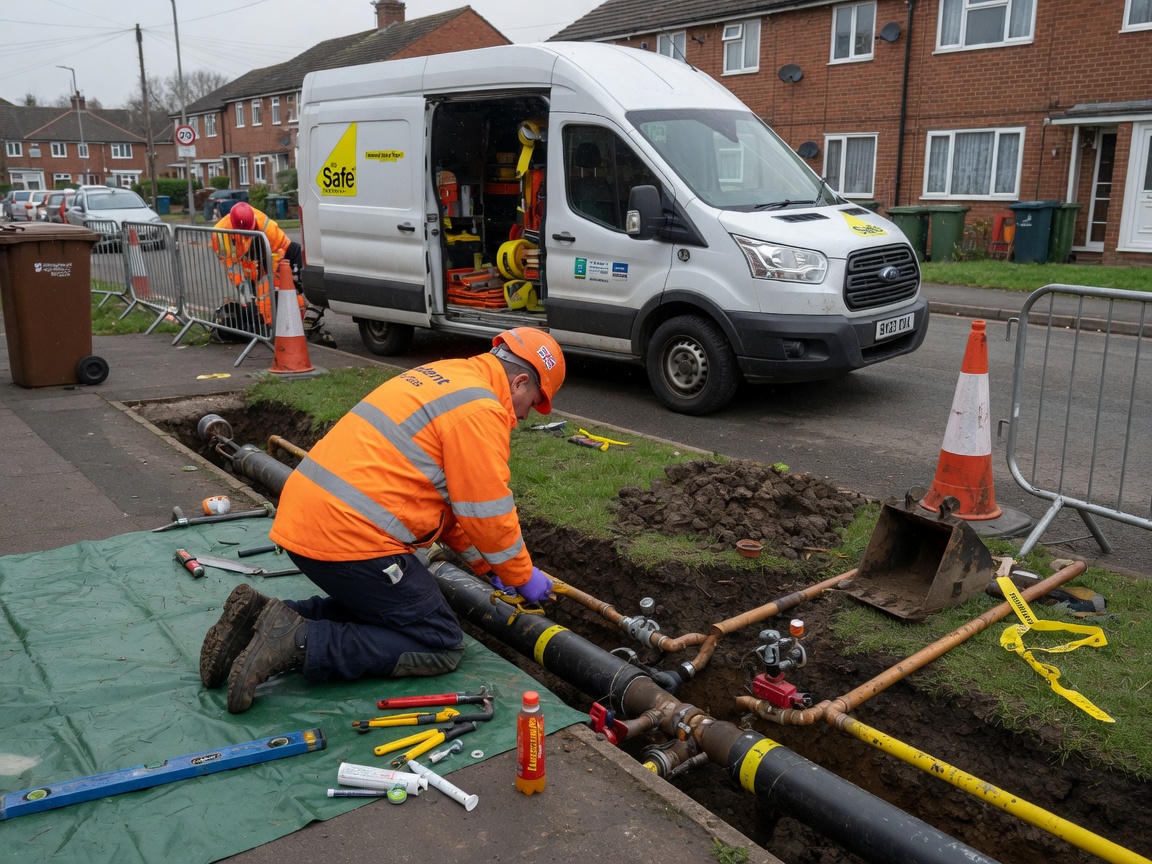
Birmingham's humid subtropical climate brings heavy summer rains that saturate clay soils across Jefferson County, accelerating corrosion on steel gas lines installed decades ago in neighborhoods like Ensley and Pratt City. Older housing stock from the early 1900s often features threaded black iron pipe that develops pinhole leaks where moisture collects near foundations. Homeowners in Southside and Highland Park frequently encounter issues when tree roots from mature oaks invade shallow trenches, cracking joints during mild winter freezes.
Terrain variations matter on every job. Rolling hills in Forest Park and Crestwood create low spots where water pools against pipes, while flatter sections in North Birmingham and Titusville allow sediment buildup that restricts flow. Technicians must excavate carefully around existing utilities in dense areas like Five Points South, where post-war additions often rerouted lines without proper documentation. Hot summers increase gas demand for cooling systems, revealing weak valves that leak under higher pressure.
Repairs here require pressure testing after any section replacement to meet local codes, especially when lines run near Oak Hill Memorial Cemetery or Railroad Park infrastructure. Materials like polyethylene pipe are preferred for new segments because they resist the acidic soils common around Avondale and Woodlawn. Crews working near the Birmingham Zoo or Sloss Furnaces sites watch for vibration from nearby rail lines that can loosen fittings over time.
Technician insight
In Birmingham, the thing that catches most people out with Gas Line Repair is the heavy clay soil in Titusville and Pratt City that expands and contracts with summer rains, stressing old threaded joints in homes built before 1950 far more than the mild winters ever do.
Leak Found Near Foundation in Avondale
Homeowner in Avondale reported a faint gas odor after heavy rain. Inspection revealed corrosion on a 1940s steel line where clay soil had shifted against the foundation. The crew replaced a twelve-foot section with polyethylene pipe, pressure tested to 60 psi, and restored the yard. No further odor was detected.
Gas Line Repair Services We Offer
✓Underground Gas Leak Repair
Locate and seal leaks in buried lines caused by soil movement in Jefferson County neighborhoods such as Ensley and Pratt City.
✓Corroded Pipe Section Replacement
Remove and replace rusted steel segments exposed by humid summers and clay soil expansion in older Southside and Avondale homes.
✓Gas Valve Replacement
Install new shut-off valves that withstand pressure changes during Birmingham's hot summers in properties near Highland Park.
✓Service Line Reconnection
Reconnect and test lines after excavation work in areas like Crestwood and Forest Park where roots frequently interfere.
✓Pressure Testing and Certification
Perform post-repair pressure checks on lines serving homes in North Birmingham and Titusville to confirm integrity.
Gas Line Repair Cost in Birmingham, AL
| Service | Typical Range | What Affects It |
|---|---|---|
| Basic Leak Repair | $450–$900 | Shallow lines in accessible yards like those in Avondale. |
| Section Replacement | $1,200–$2,800 | Longer runs in older Ensley or Pratt City homes with clay soil. |
| Valve Replacement | $350–$650 | Standard residential valves in Southside properties. |
| Full Pressure Test | $200–$400 | Required after any major repair in Jefferson County. |
Ranges are typical for Birmingham, AL and confirmed with an exact written quote before any work starts.
How it works
- 1
Site Assessment
Technician inspects the property in the reported Birmingham neighborhood, noting soil conditions and housing age.
- 2
Leak Detection
Electronic and pressure methods pinpoint the exact failure point without unnecessary digging.
- 3
Repair Execution
Excavate, replace or seal the affected section using appropriate materials for local soil and climate.
- 4
Testing and Restoration
Pressure test the line, backfill, and restore landscaping to original condition.
Pricing
Upfront quotes provided after on-site inspection; final cost depends on depth, access, and soil conditions.