
2026-08-21 · Robert Hale
Comparing Natural Gas And Propane Options For Birmingham Properties
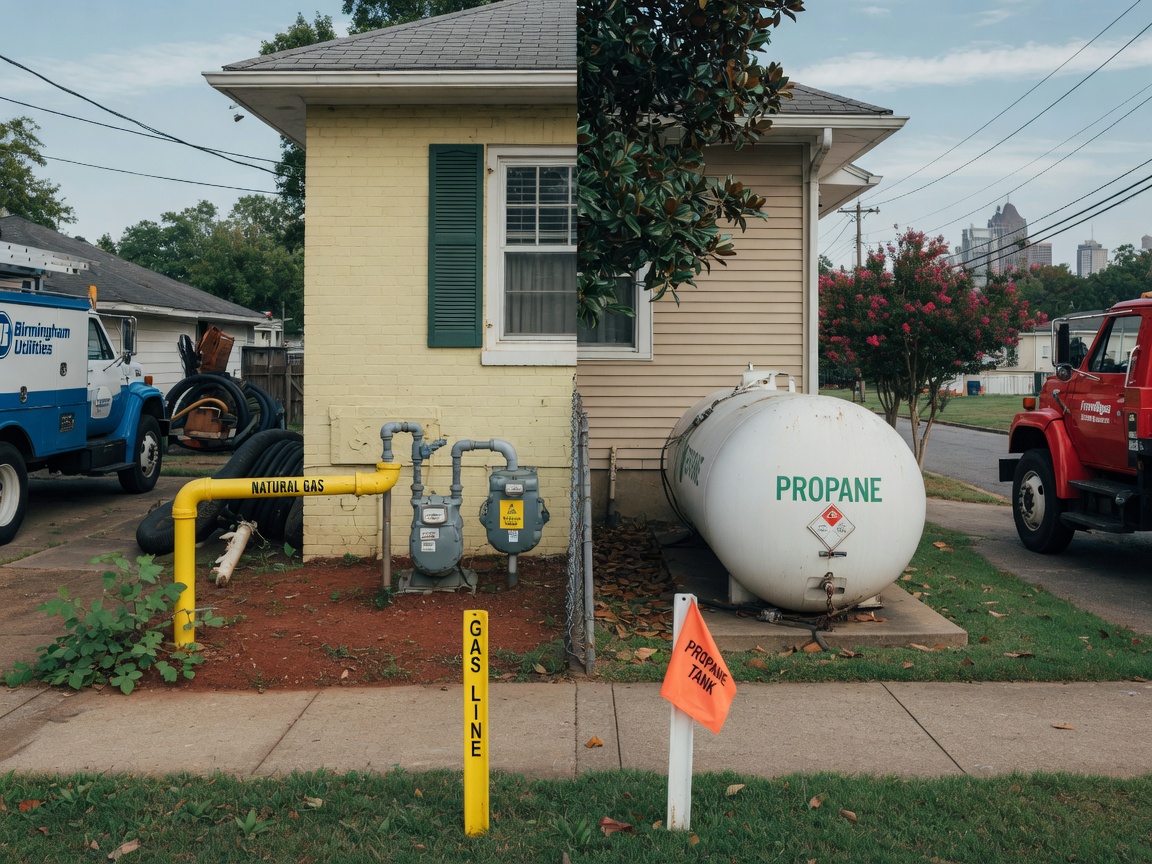
Natural gas serves the majority of Birmingham properties connected to pipelines in Jefferson County, offering lower ongoing costs than propane for homes in Southside, Five Points South, and Avondale where distribution already exists. Propane works better for outlying spots in Crestwood or East Lake without direct access, though it requires tank deliveries and higher per-unit pricing.
Availability Across Birmingham Neighborhoods
Jefferson County relies on established natural gas pipelines that serve dense areas such as Highland Park, Forest Park, and Woodlawn with consistent supply. Homes in Titusville and North Birmingham often connect directly to these lines for stoves and heaters. Propane fills gaps in Pratt City or properties near Oak Hill Memorial Cemetery where terrain or older housing stock prevents pipeline extension. Nearby cities like Hoover, Homewood, and Mountain Brook show similar patterns, with natural gas dominant in established subdivisions and propane used on larger lots. Local soil conditions with clay layers can complicate new underground runs, making pre-existing infrastructure the practical choice for most residents.
Cost Factors for Local Properties
Natural gas typically runs $0.80–$1.20 per therm delivered through Birmingham pipelines, while propane averages $2.50–$3.50 per gallon in Jefferson County. Installation of a natural gas pipeline for a 40-gallon water heater or stove connection often totals $800–$2,200 depending on distance from the main. Propane setups add tank rental or purchase fees of $400–$1,200 plus regulator work. Older housing stock in Avondale and Ensley may need line upgrades that increase costs, whereas milder winters reduce overall usage for both fuels compared to colder regions. Seasonal hot summers push air conditioning loads but leave gas appliances for cooking and hot water steady year-round.
Installation Realities in Local Terrain
Underground work in Birmingham’s humid subtropical climate faces wet soils after rains and root interference from mature trees in Forest Park or Railroad Park areas. Natural gas pipeline installation crews trench carefully around existing utilities common in Southside and Five Points South homes built before 1960. Propane lines require similar care but add tank placement rules that limit options on small lots in Highland Park. Crews account for mild winters that rarely freeze ground but bring heavy summer storms that can shift soil and expose lines. Properties near the Birmingham Zoo or Sloss Furnaces often need extra depth to avoid historic fill materials.
Efficiency and Appliance Performance
Natural gas appliances deliver steady pressure for ranges and fireplaces in connected Birmingham homes, supporting even heating without refills. Propane provides comparable BTU output yet requires monitoring tank levels during peak summer use when delivery trucks navigate congested streets near Vulcan Park and Museum. Both fuels perform reliably in the region’s mild winters, though natural gas avoids the 5–10% efficiency loss from pressure drops in long propane runs. Readers exploring upgrades can review Energy Efficiency Improvements For Gas Appliances In Alabama Homes for appliance-specific tips.
Maintenance and Safety Considerations
Routine checks differ by fuel type in Jefferson County. Natural gas systems benefit from fixed pipelines that reduce leak risks once installed, while propane tanks need annual inspections for corrosion in humid conditions. Homeowners in Crestwood or East Lake should schedule line assessments before winter to catch issues from shifting soils. Natural Gas Pipeline Installation and Propane Gas Line Installation teams address these differences directly. Questions about scheduling work appear in Questions To Ask Before Scheduling Gas Line Work In Birmingham.
Tennessee Gas Pipeline LLC at 569 Brookwood Village, Birmingham, AL 35209 handles both options with hours Monday–Friday 8am–6pm and Saturday 9am–2pm. Local crews evaluate each property’s connection to existing lines versus tank needs based on exact location and housing age.